


Autor: Weibo
Fecha: Oct 19, 2026
Screw and Barrel Partners for CI Cincinnati Plastics Machinery Builders
A Cincinnati extruder builder quotes a PVC profile line and runs into the same question every machine maker in the region eventually hits: the customer wants a ten-year wear expectation, but the screw and barrel set on the drawing has already been rebuilt twice in three years. Bolting in an identical replacement part solves nothing.
That is the practical reason so many buyers across Ohio's plastics machinery corridor end up typing "ci cincinnati" into a search bar when what they are really hunting for is a screw and barrel partner rather than a parts catalogue. The short answer is that this market does not buy a generic screw. It buys a geometry that matches a specific resin, a wear package that survives filled compounds and regrind, an inspection report an OEM quality engineer can accept without translation, and a delivery schedule that keeps an assembly line moving. Price sits behind all four.
This guide is written for the people who have to get that combination right: purchasing managers comparing quotes line by line, process engineers confirming dimensions against a worn original, and owners signing off on a new supplier relationship that may last a decade. It covers which screw geometries the region actually runs, how wear packages differ in practice, what belongs in a request for quotation, how freight into Ohio is usually organized, and where the real purchasing risks sit.
What CI Cincinnati Buyers Compare Before They Place a Screw and Barrel Order
Cincinnati is not a single market. It is a compact industrial belt where three different kinds of buyer sit within an hour of each other, and each one judges a screw and barrel supplier on different grounds.
The first group is the machinery OEM. These companies build extruders or injection molding machines and buy screw and barrel sets as production components, not as spare parts. Their engineering department controls the drawing, their quality department controls the incoming inspection, and their purchasing department controls volume and scheduling. Repeatability across batches matters more than a single unit price, because a set that measures slightly differently from the last shipment shows up as an assembly problem on their floor.
The second group is the plastics processor. These plants run pipe, sheet, profile, foam, or injection molded parts and buy a screw and barrel when the old one wears out or when a line is upgraded. Their constraint is downtime. A processor measuring a worn barrel with a bore gauge and matching it to a drawing from 2009 needs a supplier who can work from a hand sketch as comfortably as from a native CAD file.
The third group is the rebuild and maintenance shop that serves both. They sit in the middle, buying replacement flights, feed throats, non-return valves, and complete sets, and they care most about documentation and consistency because their own reputation travels with every part they install.
Across all three, the same four comparisons decide the order. Geometry match comes first, because a screw that is 0.05 mm off on root diameter changes the compression ratio and the melt quality. Wear package comes second, because a nitrided barrel running 40 percent glass-filled polyamide will not reach the hours the customer promised. Inspection data comes third, because a Cincinnati quality engineer will want dimensional records and hardness values in the box. Landed cost and lead time come fourth, and they matter most when a replacement is urgent rather than planned.
A screw and barrel manufacturer that can answer all four questions in the first reply usually wins the account. One that replies with a price list and a request for a drawing number rarely does.
In the Cincinnati market, the winning quote is the one that arrives with geometry confirmation, a wear recommendation, an inspection plan, and a realistic ship date, not the lowest unit price.
Matching Screw Geometry to the Machine Your Customer Runs
Most sourcing mistakes start here, long before price is discussed. A buyer compares two quotes for a "twin screw and barrel" without noticing that one is conical and one is parallel, or that the compression ratio differs because the customer's original was rebuilt with a non-standard flight depth. The four main geometries below cover nearly everything a Cincinnati machine builder or processor will ask about.
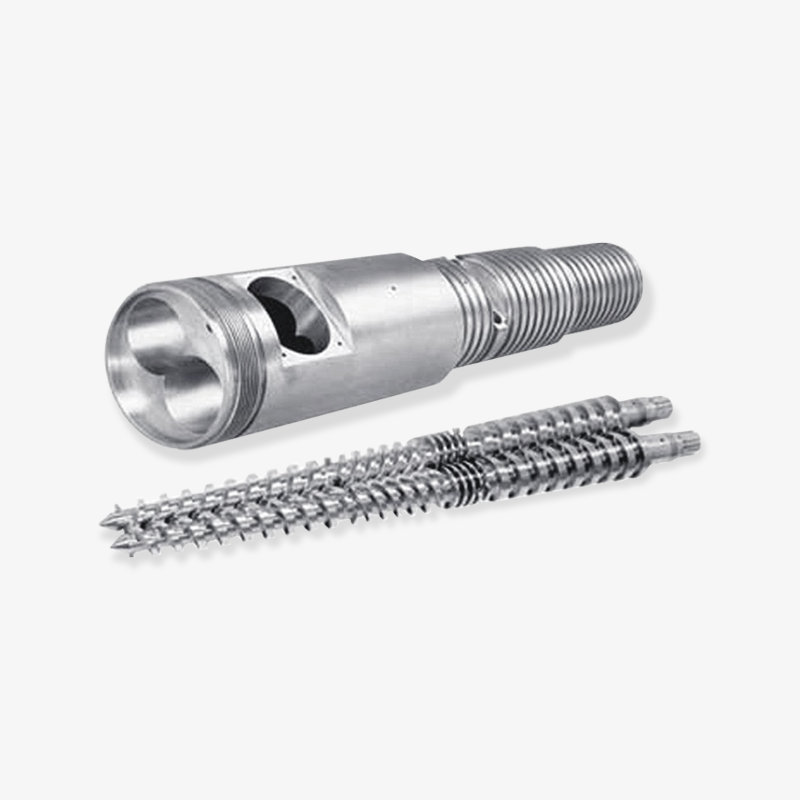
Conical Twin Screw and Barrel
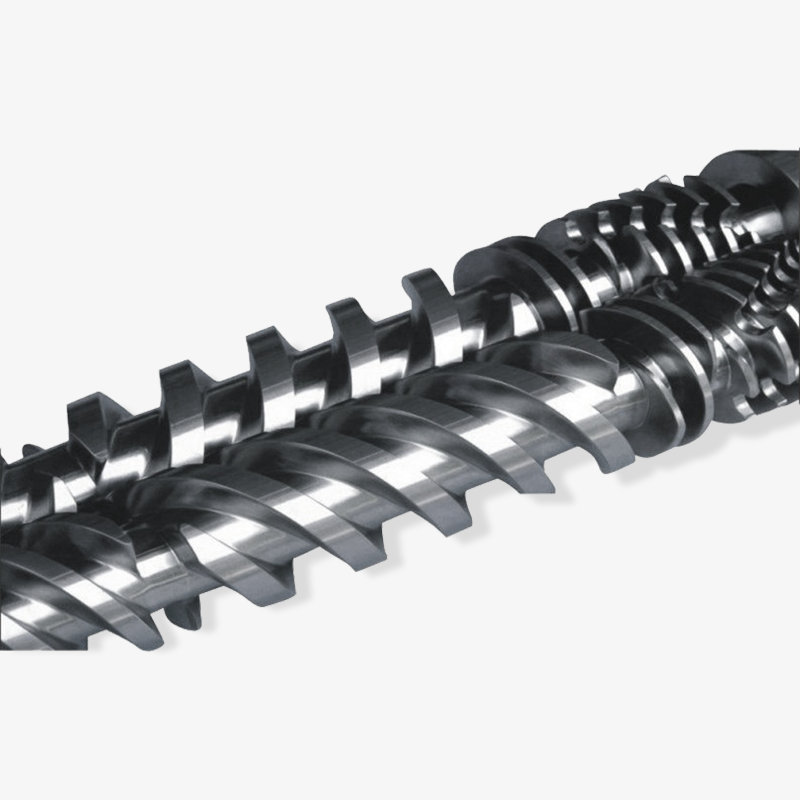
Conical twin screw sets dominate rigid PVC work: pipe, siding and window profile, fence, decking, and wood-plastic composite. The intermeshing conical design generates high conveying pressure in a short length, which suits dry blend feeding and a demanding compression zone. When a Cincinnati profile extruder builder specifies a conical set, the details that decide whether the parts fit are the center distance, the screw tip geometry, the flight pitch progression, and the barrel flange pattern.
Center distance is where wear shows up first. Conical screws wear at the flight tips and at the root, and as clearance opens, output drops and the pressure curve becomes unstable. A processor who reports "the line will not hold gauge" on a ten-year-old machine is usually describing center distance drift, not a heater problem. A supplier who asks for the barrel bore measurement at three points along the length, plus the current center distance, is a supplier who has done this before.
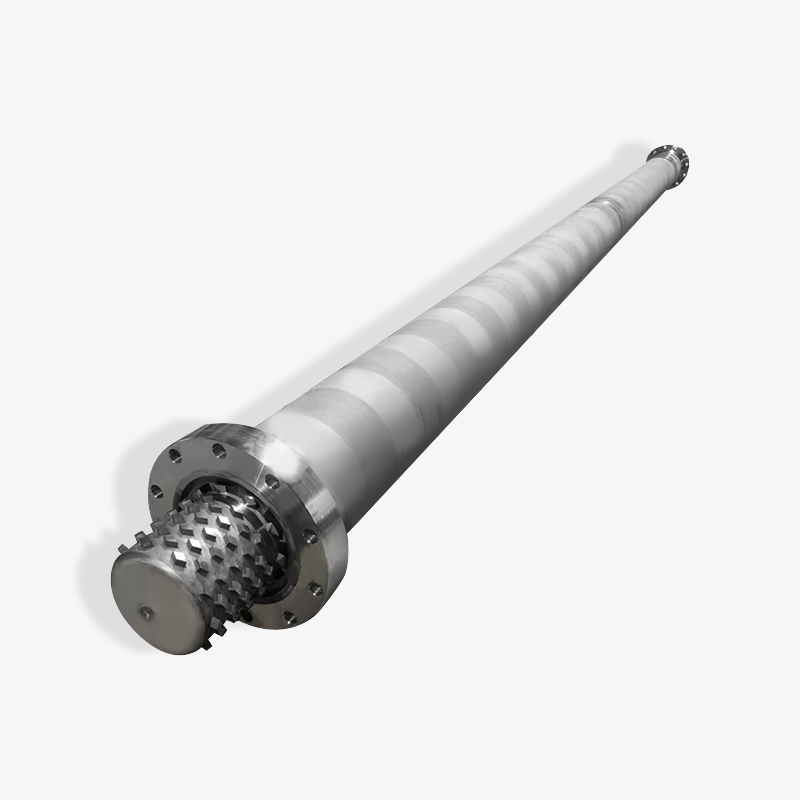
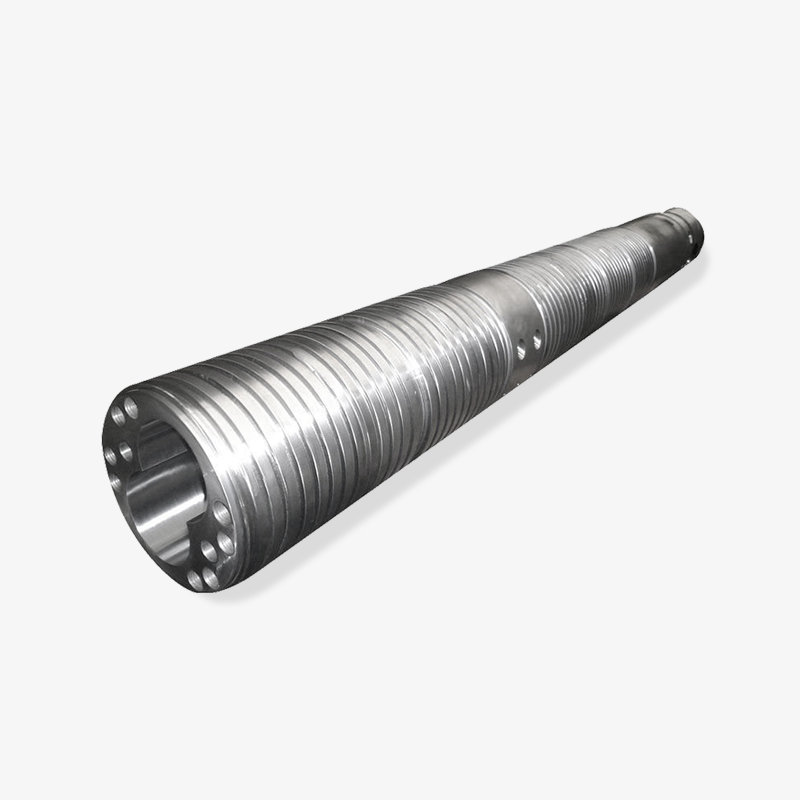
 Custom Conical Twin Screw and Barrel for Material ProcessingReview this custom conical screw and barrel set when center-distance wear or material-conveying stability matters; confirm base steel grade and bore measurements before ordering.View Product →
For a first order, ask for the material grade behind the nitriding or bimetallic specification, not just the surface hardness number. A 900 HV surface on a soft base steel behaves very differently from the same hardness on a properly heat-treated substrate once the part goes through thermal cycling.
Parallel Twin Screw and Barrel
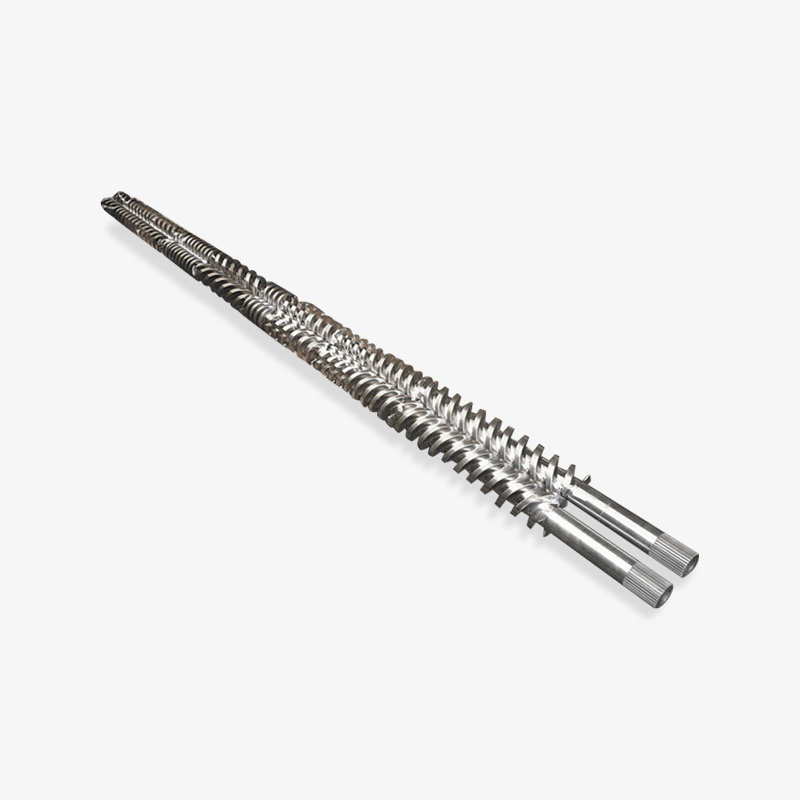
Parallel twin screw machines handle compounding, masterbatch, filled and reinforced compounds, and the high-throughput pelletizing work that sits upstream of many Cincinnati molding operations. The geometry is modular in most modern machines, which changes the sourcing conversation: buyers are not ordering one barrel but a set of barrel sections, and the wear pattern differs zone by zone.
Feed zone, mixing zone, and die head each see different loads. A supplier who treats a parallel twin barrel as one uniform liner specification will usually overbuild the feed section and underbuild the mixing section. Splitting the wear specification by zone costs a little more on paper and much less over the life of the machine. If you want a deeper technical walkthrough on how these machines achieve mixing and conveying, the article on parallel twin screw technology is a useful reference to send to an engineering colleague.
Single Screw, Sheet, and EPE Foam
Single screw extruders remain the workhorse for sheet, pipe, rod, and general profile work where the compound is already well mixed. In the Cincinnati area, sheet lines serving packaging and construction customers are a steady source of single screw replacement orders. The compression ratio and the feed section design do more to determine output stability than the nominal diameter does, which is why a supplier should always ask what resin and what bulk density the customer is running.
EPE foam is a separate case. Foam extrusion runs a blowing agent through the barrel, and the screw geometry has to manage gas dispersion, pressure drop, and cooling without allowing premature decomposition. A pearl cotton screw and barrel set is not a general purpose single screw with a different label, and buyers who treat it that way end up with inconsistent cell structure. Specifying foam output, blowing agent type, and the target density at the die makes the difference between a workable set and a line that runs for two weeks and then stops.
Planetary Extruders for Rigid PVC
Planetary roller sections are still used in rigid PVC calendering and some pipe operations because the multiple planetary screws provide gentle, uniform plastification with a large heat exchange surface. The wear geometry is completely different from a twin screw: clearances between the planetary screws and the barrel flutes drive performance, and those clearances have to be checked individually rather than as an average. Buyers specifying planetary parts should send the wear measurement for each station, not a single number.
| Geometry | Typical Cincinnati applications | What to specify in the inquiry | Rebuild and repair notes |
|---|---|---|---|
| Conical twin screw and barrel | Rigid PVC pipe, window profile, siding, WPC decking | Center distance, L/D, flight pitch, compression ratio, flange pattern | Wear shows first at flight tips and root; check center distance before ordering |
| Parallel twin screw and barrel | Compounding, masterbatch, filled compounds, pelletizing | Barrel section list, zone-by-zone liner spec, screw element sequence | Wear differs by zone; do not apply one liner grade across the whole length |
| Single screw and barrel | Sheet, pipe, rod, general profile, EPE foam | Resin and bulk density, compression ratio, feed section design, screen pack | Barrel bore taper and screw flight wear usually move together |
| Planetary screw and barrel | Rigid PVC calendering, some pipe lines | Per-station clearance measurements, flute count, barrel cooling layout | Clearances must be checked station by station, not averaged |
Wear Packages: Nitrided, Bimetallic, and What the Quote Should Show
Wear is the second half of every screw and barrel conversation in Cincinnati, and it is the half most often reduced to a single number in a quotation. A hardness figure alone tells you very little. What matters is the combination of base steel, treatment depth, and the actual filler load the part will see.
Unfilled polyolefins, polystyrene, and rigid PVC dry blends are relatively kind. Glass-filled polyamide, mineral-filled polypropylene, masterbatch with high pigment load, and any stream with regrind and abrasive contamination are not. The chart below compares common build options on a relative index, using a standard nitrided set as the baseline of 100.
Relative wear index by screw and barrel build (nitrided baseline = 100)
Nitrided screw and barrel, standard case
Nitrided barrel with polished screw flights
Bimetallic barrel with nitrided screw
Bimetallic screw and barrel set
Carbide overlay on flights, specialty build
Index values are relative comparisons for planning discussions, not performance guarantees. Actual life depends on filler load, screw speed, temperature profile, and contamination level.
A bimetallic barrel is normally produced by centrifugal casting a wear-resistant alloy liner into the barrel body, which gives a liner hardness in the region of 58 to 62 HRC with a carbide phase dispersed through it. That liner resists abrasion far better than a nitrided case, which is typically 0.3 to 0.6 mm deep and is at its best against adhesion and corrosion rather than hard fillers. Pairing a bimetallic barrel with a nitrided screw is a common compromise: it protects the more expensive and harder to replace component while keeping the screw cost reasonable.
For a machine running more than about 30 percent glass-filled compound, or running regrind with mineral filler, the pairing of a bimetallic screw and barrel set is usually easier to justify than repeat replacements. It is worth doing the arithmetic with the customer rather than simply quoting both options and letting them choose on price. Downtime on a Cincinnati sheet or profile line typically costs far more per day than the price gap between a nitrided and a bimetallic set.
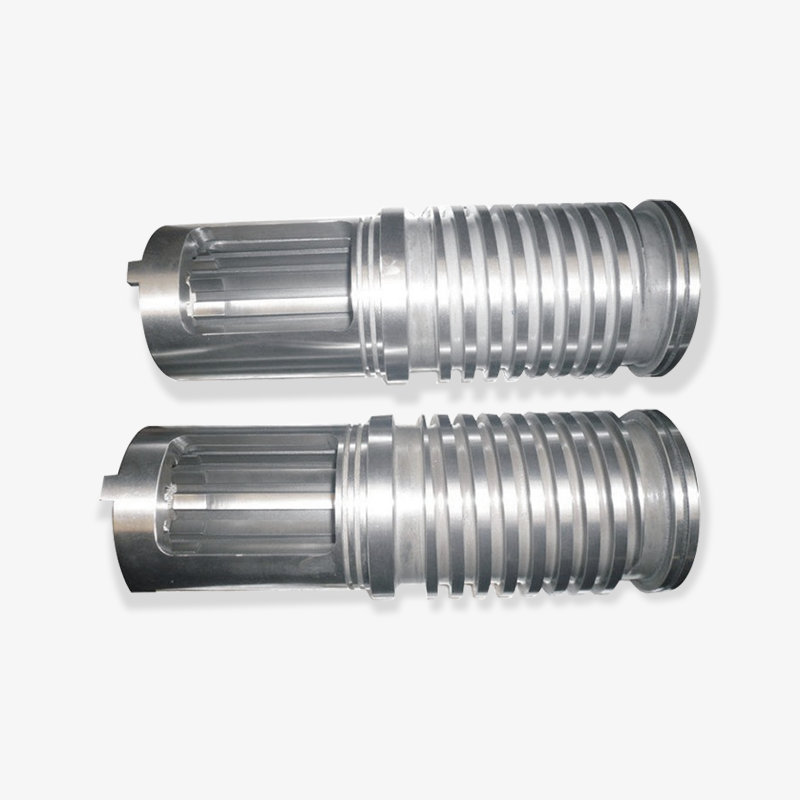
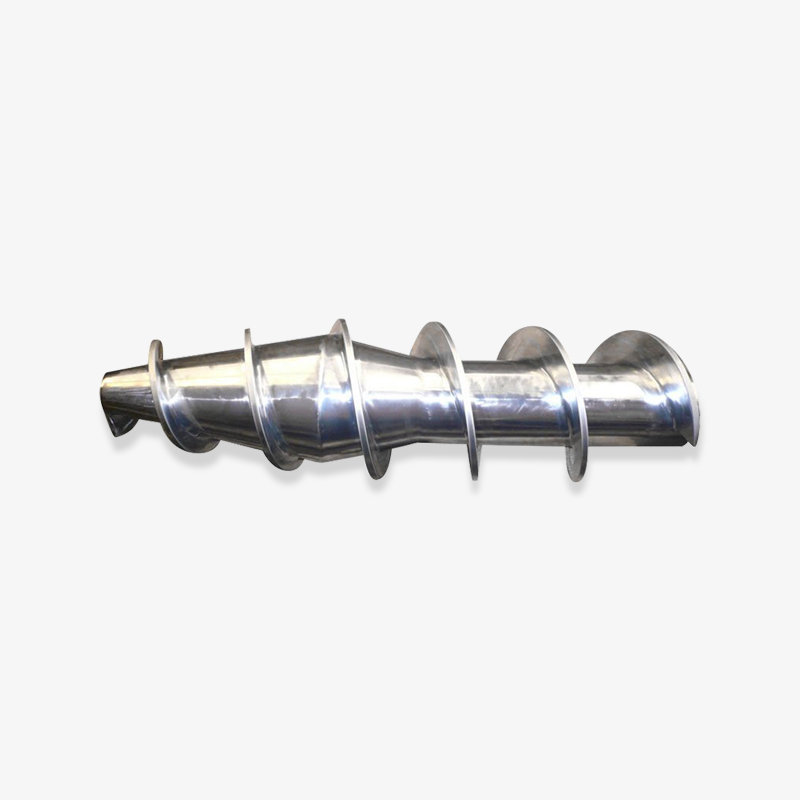
 Bimetallic Screw for Glass-Filled and Engineering PlasticsConsider this bimetallic screw for abrasive glass-filled or mineral-filled compounds; confirm alloy coverage and barrel-liner casting details before ordering.View Product →
Two practical notes for buyers. First, ask whether the bimetallic liner is centrifugally cast along the full working length or only in the metering zone; the answer changes the price and the life considerably. Second, ask for the liner thickness in the quotation, because a barrel that can be honed once and reused is a different value proposition from one that must be scrapped at the first sign of wear.
Choose the wear package from the filler load and the downtime cost, not from the hardness number alone; a bimetallic barrel with a nitrided screw is often the most economical pairing.
Injection Molding Screw Barrels and the Accessories That Get Forgotten
Injection molding is the other large demand stream in the region, and it behaves differently from extrusion. The screw does not run continuously at steady state; it plasticizes in cycles, experiences rapid pressure changes, and is expected to recover quickly between shots. General purpose screws handle polyolefins and polystyrene well, but polyamide, polycarbonate, POM, and any glass-filled grade demand geometry and wear choices that match the cycle.
The most common specification mistake with injection molding screw barrels is treating the screw as an isolated item. The non-return valve, the check ring, the screw tip, and the nozzle all sit in the same melt path and all wear. A buyer who replaces a worn screw but keeps a worn check ring will usually see the same inconsistency in shot weight that prompted the replacement in the first place. Ordering the screw, the valve, and the tip together costs a little more up front and saves a second teardown.
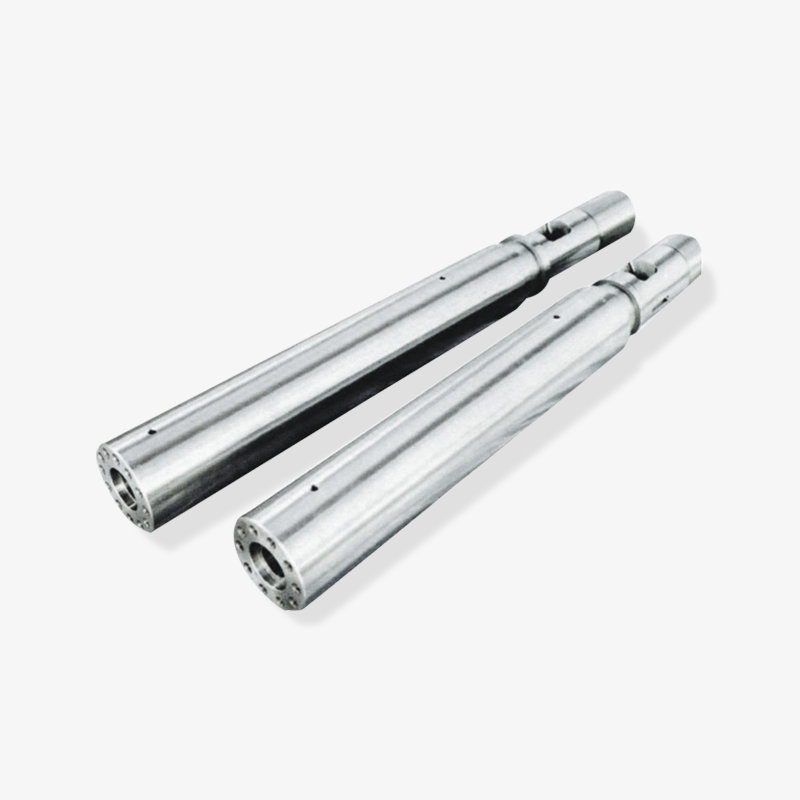
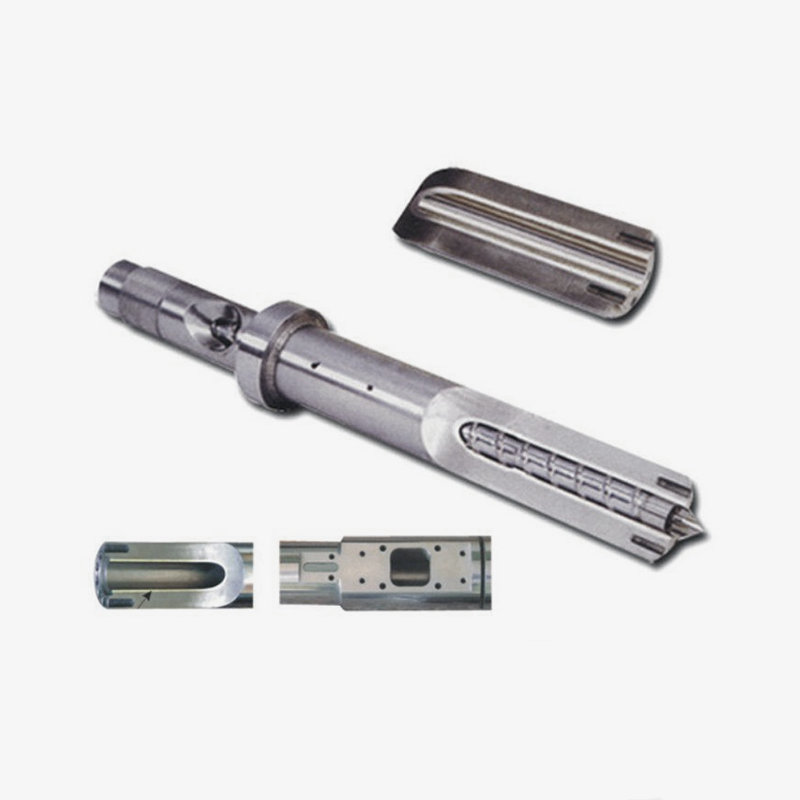
 Custom Injection Molding Screw and Barrel AssemblyReview this custom screw and barrel for injection molding projects where plasticization stability matters; confirm melt-path component matching and drawing details before production.View Product →
For a machine builder buying components for new assembly, the drawing review should cover the drive end, the keyway and coupling details, the heater band layout, and the thermocouple positions. A screw that is dimensionally perfect but has the thermocouple holes 15 mm off will fail at commissioning because the temperature profile cannot be set as designed. It is worth confirming these details in writing before production starts rather than discovering them at the assembly station.
Processors replacing a set on an existing press have a different priority. They need the supplier to work from measured dimensions of the worn part, including the actual bore at the feed zone and the metering zone, and to confirm which dimensions are critical and which have tolerance room. A supplier who asks for three bore measurements, the screw OD at both ends, and a photograph of the drive coupling is doing the job properly.
Tolerances, Inspection, and What Belongs in the RFQ
Most disputes between a Cincinnati buyer and an overseas screw and barrel supplier trace back to a vague request for quotation rather than a manufacturing failure. The supplier built what the drawing said; the buyer expected something the drawing did not capture. The table below lists the items that should be settled in writing before production, especially on a first order.
| RFQ item | Why it changes the outcome | What to supply or request |
|---|---|---|
| Screw geometry data | Root diameter and flight pitch set compression ratio and melt quality | Drawing or measured worn part, including L/D and compression ratio |
| Barrel bore and liner | Bore tolerance and liner grade drive both fit and life | Nominal bore, measured bore at three points, liner type and thickness |
| Interface details | Flange, feed throat, keyway and coupling errors stop assembly | Flange pattern, feed throat drawing, drive end detail, heater layout |
| Material and wear spec | Base steel and treatment depth determine real wear life | Base steel grade, nitriding depth or bimetallic grade, surface hardness range |
| Inspection record | Quality engineers need data, not assurances | Dimensional report, hardness readings, runout values, pressure test result |
| Marking and packaging | Prevents mix-ups and shipping damage on multi-item orders | Part marking convention, crate type, rust protection, packing list format |
On tolerances, the numbers themselves should come from the drawing wherever a drawing exists. Where it does not, a supplier should be able to state a working range and explain the consequence of the range, for example how much straightness variation the machine's barrel support can absorb before the screw begins to rub. Buyers should be cautious about any quotation that states a tolerance without explaining what it is measured against.
Inspection documentation deserves its own line in the purchase order. For a machinery OEM, a dimensional report with actual measured values is standard. For a processor replacing one set, a short report covering bore, screw OD, hardness, and runout is usually enough. Ask for the format you want before production, because producing a report retroactively for a finished part is not the same thing as measuring it during manufacture.
A detailed RFQ with geometry data, wear specification, interface details, and an agreed inspection format removes most of the risk from a first order.
Lead Times, Freight, and Landed Cost Into Cincinnati
Cincinnati is inland, which means every shipment from a Chinese screw and barrel manufacturer is a multi-leg movement. Buyers who compare only the ex-works price often get an unpleasant surprise once freight, duty, and inland haulage are added. The table below breaks the cost into its parts, which is also the right structure for comparing two suppliers.
| Cost element | What it covers | Practical note |
|---|---|---|
| Component price | Screw, barrel, and any accessories at the supplier's works | Compare like for like on steel grade, liner type, and included accessories |
| Engineering and drawing review | Dimensional confirmation, wear recommendation, drawing markup | Usually included; ask explicitly on custom or reverse-engineered parts |
| Export packing | Crating, rust protection, part marking, packing list | Screws should be supported along their length, not cantilevered in the crate |
| Inland and ocean freight | Haulage to port, ocean leg, port handling | Transit times vary by routing; plan for the port pair, not a single number |
| Duty and trade measures | Import duties and any applicable trade actions at the time of entry | Rates change; confirm the current position with a customs broker before quoting |
| Inland delivery to Ohio | Rail or truck from the arrival port to the Cincinnati area | Allow extra days for rail and for scheduling a crane-equipped delivery |
On timing, a standard single screw or nitrided barrel typically moves through production in a few weeks once the drawing is approved. Bimetallic builds, planetary sets, and anything requiring a new pattern or reverse engineering take longer. Ocean transit adds weeks on top, and inland delivery to Ohio adds a few more days. A buyer planning a shutdown should work backwards from the installation date, not forwards from the order date.
Two practical ways to shorten the effective lead time. First, order the wear part with the machine rather than after the failure; a spare set on the shelf turns a four-week emergency into a one-day swap. Second, for a machinery OEM with steady volume, agree a rolling schedule with the supplier so that common geometries are already in production when the purchase order lands.
Purchasing Risks and How to De-Risk a First Order
None of the risks below are unique to Chinese suppliers, but each one shows up more often when the buyer and supplier are eleven time zones apart and the part cannot be inspected before it ships.
- Geometry drift on reverse-engineered parts. A worn sample measured without compensating for wear produces a screw that is already at the end of its tolerance band when new. Send both the drawing and the measured dimensions, and state which one governs.
- Wear specification substitution. A quotation that says "bimetallic" without a grade or liner thickness leaves room for a cheaper build. Require the grade and the thickness in writing.
- Interface mismatches. Flange patterns, keyways, and heater layouts are the most common cause of a part that arrives correct but will not assemble. Confirm these with photographs and marked-up drawings.
- Documentation gaps. If the inspection report was not agreed before production, it may arrive as a generic certificate that satisfies nobody in a quality department.
- Packing damage. Long, slender screws bend when they are supported only at the ends of a crate. Specify how the part should be supported.
The most effective de-risking step is a small first order. A single replacement set for a line the customer already knows well gives both sides a chance to test communication, documentation, and fit before a multi-year supply agreement is discussed. A screw and barrel supplier worth keeping will treat that first set as seriously as a hundred-unit order.
Start with one measurable set, confirm the documentation and interface details, then scale to a supply agreement once the working relationship is proven.
Supplier Background and Further Reading
Screw and barrel manufacturer profile Founded in 1990, the company operates a production floor of more than 10,000 square meters and supplies conical, parallel, single, planetary, and bimetallic screw and barrel sets, injection molding components, rubber extruder screws, and complete extrusion lines to machine builders and processors in the United States, Germany, the Middle East, and Southeast Asia.
Where a buyer needs a custom geometry rather than a catalogue item, the useful first step is a conversation about the resin, the machine, and the wear history, followed by a drawing review. Most of the technical questions covered above can be resolved in that exchange before a quotation is issued.
FAQ: Screw and Barrel Sourcing for the Cincinnati Market
How do CI Cincinnati buyers usually start a screw and barrel inquiry?
Most begin with a drawing, a measured worn part, or both, plus the resin and filler load the machine runs. The strongest inquiries include the machine type, the L/D, the current bore measurement, and the reason for replacement. That combination lets a supplier confirm geometry and recommend a wear package in the first reply instead of asking three rounds of follow-up questions.
Can a supplier match a screw for a machine that is twenty years old and has no drawing?
In most cases yes, provided the worn part is measured carefully and the wear allowance is factored out. Photographs of the drive end, the feed throat, and any markings on the barrel help. The buyer should confirm which dimensions are critical, because a reverse-engineered part built to the worn sample will usually underperform a part built to the original nominal dimensions.
How long should a bimetallic screw and barrel set last compared with a nitrided set?
It depends more on the filler load and operating conditions than on the label. In abrasive compounds such as glass-filled polyamide or mineral-filled polypropylene, a bimetallic set generally holds its dimensions for considerably longer than a nitrided set. In unfilled polyolefins the gap narrows, and a nitrided set may be the more sensible purchase. Ask for a comparison in your specific resin rather than a general claim.
What is the minimum order for a first trial?
A single set is normally workable, particularly for a replacement on an existing machine. Buyers should expect the per-unit price to be less favorable than on a scheduled volume order, and should factor the freight into the comparison. For machinery OEMs, a small batch of two or three sets is often the practical way to test repeatability before committing to a schedule.
How do buyers handle freight and duties into Ohio?
Most use an experienced customs broker and compare suppliers on a landed cost basis rather than ex-works price. The shipment usually moves by ocean to a US port and then by rail or truck to the Cincinnati area. Duty rates and any applicable trade measures should be confirmed at the time of entry, because they change and they materially affect the comparison between suppliers.
Do suppliers provide complete extruders as well as components?
Some do. Beyond screw and barrel sets, planetary and conical twin screw extruders and complete pipe, sheet, and profile lines can be supplied, which is useful for a machine builder assembling a full system or for a processor adding capacity. For buyers who only need a replacement component, the component path remains the simpler and faster route.
Which documents should arrive with the shipment?
At minimum, a packing list that matches the part markings, a dimensional inspection report with actual measured values, hardness readings, and any pressure test results for the barrel. Buyers with a formal incoming inspection process should agree the report format before production starts, because retrofitting documentation to a finished part is not the same as measuring it during manufacture.
The pattern across every buyer type in the region is consistent. The Cincinnati machine builder, the processor running rigid PVC, and the rebuild shop all need the same four things answered clearly: does the geometry match, will the wear package survive this resin, will the documentation satisfy quality, and when will it actually arrive. Get those four right and price becomes a normal commercial conversation rather than a gamble.
If a current line is losing output, holding gauge poorly, or consuming more energy than it used to, the screw and barrel set is usually the first place worth measuring. A short technical exchange with a manufacturer who has seen those symptoms before is a faster route to an answer than another round of quotes for an identical replacement part.
Pantalla de rodamiento seleccionada


 浙公网安备 33090202000520 号
